
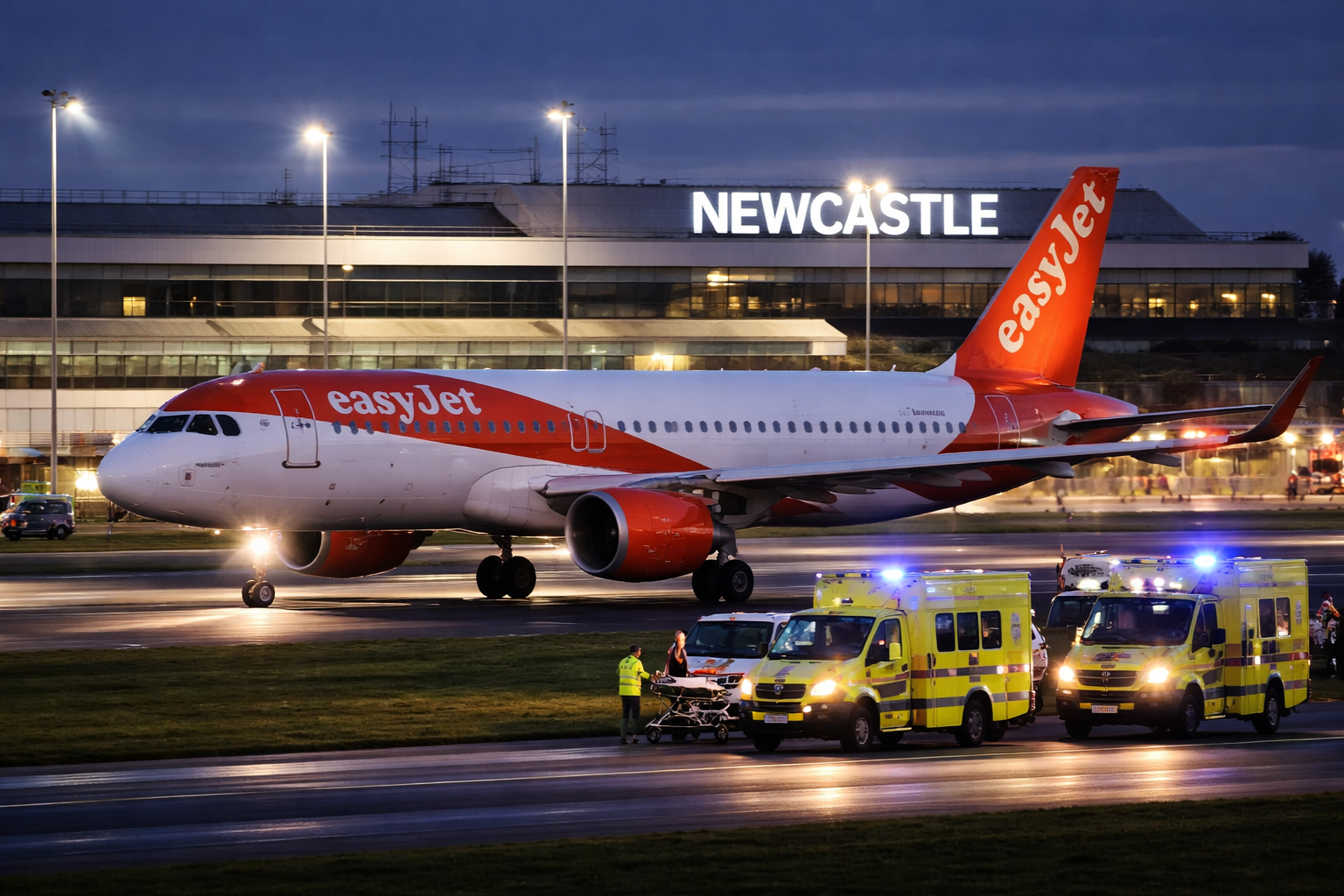
The incident involving easyjet flight u2238 emergency landing newcastle became a widely discussed aviation event due to the circumstances surrounding the diversion and the swift execution of safety procedures that ensured the well-being of everyone onboard. Air travel is often considered one of the safest modes of transportation, yet moments like this highlight how critical preparedness, coordination, and decision-making are in maintaining that safety. The flight, which was originally scheduled to travel from Copenhagen to Manchester, unexpectedly changed course when a serious situation developed mid-air, prompting the crew to take immediate action.
As the aircraft crossed over the North Sea, a medical emergency involving a passenger escalated to a level that required urgent attention. In such cases, time becomes the most important factor, and the ability of the crew to respond quickly determines the outcome. The pilots, supported by trained cabin crew, made the decision to divert the aircraft to Newcastle, the nearest suitable airport equipped to handle medical emergencies efficiently. This decision marked the beginning of a carefully coordinated response that demonstrated how aviation systems are designed to handle unexpected crises without compromising overall safety.
The event captured attention not because of panic or chaos, but because of how controlled and systematic the response was. Passengers onboard experienced a situation that could have been alarming, yet the professionalism of the crew ensured calm was maintained throughout. The emergency landing at Newcastle was not a failure or accident, but rather a clear example of how aviation safety protocols function exactly as intended when faced with real-world challenges.
Understanding the In-Flight Emergency Situation
During the journey, the onset of a medical issue with one of the passengers quickly shifted the nature of the flight from routine to urgent. Medical emergencies at cruising altitude present unique challenges because immediate hospital-level care is not available onboard. While aircraft are equipped with medical kits and crew members receive training to handle such situations, there are limits to what can be done without proper facilities. In this case, the passenger’s condition required intervention beyond what could be provided in the air.
The cabin crew responded promptly by assessing the situation and coordinating with any medically trained passengers who might have been onboard. This is a standard practice, as airlines often rely on volunteer assistance from doctors or healthcare professionals when emergencies occur during flights. At the same time, communication with the cockpit ensured that the pilots were fully informed about the severity of the situation, allowing them to evaluate the best course of action.
Once it became clear that the passenger needed urgent medical attention, the pilots initiated emergency procedures. This included declaring an emergency and preparing for a diversion. The process involves careful calculation, including fuel levels, distance to alternative airports, weather conditions, and the availability of emergency services. The decision to divert is never taken lightly, but in this case, it was necessary to prioritize human life over schedule and convenience.
Decision to Divert and the Role of Newcastle Airport
The selection of Newcastle as the diversion point during the easyjet flight u2238 emergency landing newcastle was based on multiple critical factors. The airport was geographically the closest option that could safely accommodate the aircraft while also providing immediate access to advanced medical facilities. In aviation, proximity alone is not enough; the airport must also be capable of handling the specific aircraft type and any emergency requirements associated with the situation.
Newcastle Airport is known for its readiness to handle emergency landings, with trained ground staff and rapid response teams available around the clock. Once the pilots communicated their intention to divert, air traffic control began coordinating the aircraft’s arrival. This included clearing airspace, prioritizing the flight over other traffic, and ensuring that emergency services were prepared on the ground.
The coordination between the flight crew and air traffic control is a critical component in such scenarios. Every second counts, and seamless communication ensures that there are no delays or misunderstandings. By the time the aircraft began its descent into Newcastle, ambulances and medical personnel were already positioned to respond immediately upon landing. This level of preparation reflects the efficiency of aviation emergency systems, where multiple teams work together to achieve a single goal: ensuring safety.
The Emergency Landing Process and Passenger Experience
The landing itself during the easyjet flight u2238 emergency landing newcastle was conducted with precision and professionalism. Despite the urgency of the situation, the pilots followed all standard procedures to ensure a safe approach and touchdown. Emergency landings, particularly those involving medical situations, are not about speed alone but about maintaining control and minimizing risk.
Passengers onboard were informed about the diversion in a calm and reassuring manner. Communication plays a vital role in preventing panic, and the crew’s ability to explain the situation helped maintain order throughout the cabin. While some passengers may have felt anxious, the overall atmosphere remained controlled, largely due to the confidence displayed by the flight attendants and pilots.
As the aircraft touched down, emergency vehicles were visible on the runway, ready to assist. This is a standard precaution in emergency landings, ensuring that any potential complications can be addressed immediately. Once the aircraft came to a stop, medical teams boarded quickly to attend to the affected passenger. The efficiency of this process minimized the time between landing and medical intervention, which can be crucial in life-threatening situations.
Medical Response and Immediate Aftermath
Following the easyjet flight u2238 emergency landing newcastle, the primary focus shifted entirely to the passenger requiring medical attention. Paramedics entered the aircraft equipped with necessary medical tools and quickly assessed the individual’s condition. The transition from onboard care to professional medical treatment was seamless, reflecting the importance of coordination between airline staff and emergency responders.
The passenger was stabilized and then transported to a nearby hospital for further evaluation and treatment. While specific details about the medical condition were not publicly disclosed, the urgency of the diversion indicated that immediate care was essential. Situations like this highlight the importance of having well-trained emergency personnel ready to respond at airports.
For the remaining passengers, the experience was both unexpected and educational. Many witnessed firsthand how aviation systems prioritize safety and human life. After the medical situation was handled, the aircraft underwent routine checks to ensure it was fit to continue the journey. This included refueling and verifying that all systems were functioning correctly before resuming the flight to Manchester.
Aviation Safety Protocols in Action
The incident of easyjet flight u2238 emergency landing newcastle serves as a powerful example of aviation safety protocols functioning as designed. Modern aviation operates on the principle of preparedness, with detailed procedures in place for a wide range of scenarios, including medical emergencies. These protocols are developed through years of experience, research, and continuous improvement.
Pilots undergo extensive training to handle emergency situations, including simulations that replicate real-life scenarios. Cabin crew members are also trained in first aid and emergency response, ensuring they can provide immediate assistance when needed. The combination of these skills creates a safety net that protects passengers even in unexpected situations.
Air traffic control plays an equally important role by managing airspace and coordinating emergency responses. Their ability to prioritize flights and provide clear instructions ensures that aircraft can reach their destination safely, even under challenging circumstances. The successful handling of this incident demonstrates the effectiveness of these systems and the importance of teamwork in aviation.
Public Reaction and Media Attention
The easyjet flight u2238 emergency landing newcastle quickly gained attention across various media platforms, as stories involving emergency landings often do. However, the tone of coverage was largely focused on the professionalism and efficiency displayed by the crew and emergency services. Rather than highlighting fear or danger, the narrative emphasized how well the situation was managed.
Passengers who shared their experiences often praised the calm demeanor of the crew and the clear communication provided during the flight. Such feedback reinforces the importance of training and preparedness in maintaining passenger confidence. While emergency landings can be unsettling, the way they are handled can significantly influence how passengers perceive the experience.
Media coverage also brought attention to the broader topic of in-flight medical emergencies, which occur more frequently than many people realize. These incidents rarely result in major disruptions because of the robust systems in place to address them. The event served as a reminder of the complexities involved in air travel and the many layers of safety that operate behind the scenes.
Continuation of the Journey and Operational Recovery
After the immediate emergency was addressed, the focus shifted to resuming normal operations. The aircraft involved in the easyjet flight u2238 emergency landing newcastle remained on the ground for a short period while necessary checks were completed. This ensured that there were no technical issues and that the aircraft was safe to continue its journey.
Passengers were kept informed throughout this process, which helped maintain trust and transparency. Once all procedures were completed, the flight departed Newcastle and continued to Manchester, arriving later than originally scheduled. Delays are an unavoidable consequence of emergency diversions, but they are a small price to pay when compared to the importance of addressing urgent situations.
The ability to recover quickly from such incidents is a testament to the resilience of airline operations. Ground staff, maintenance teams, and flight crews work together to minimize disruptions while maintaining safety as the top priority. This coordinated effort ensures that even after an unexpected event, the journey can continue smoothly.
Broader Implications for Air Travel Safety
The easyjet flight u2238 emergency landing newcastle highlights several important aspects of modern air travel, particularly the emphasis on safety and preparedness. Incidents like this demonstrate that while emergencies can occur, the systems in place are designed to handle them effectively. This provides reassurance to passengers and reinforces confidence in the aviation industry.
Medical emergencies are among the most common reasons for flight diversions, and airlines are continually improving their ability to respond to such situations. Advances in onboard medical equipment, crew training, and communication technology have significantly enhanced the ability to manage emergencies in the air. These improvements contribute to the overall safety of air travel and ensure that passengers receive the care they need when unexpected situations arise.
The incident also underscores the importance of having well-equipped airports capable of handling emergencies. Airports like Newcastle play a crucial role in providing the infrastructure and resources needed to support diverted flights. Their readiness to respond quickly and effectively is an essential component of the aviation safety network.
Conclusion
The story of easyjet flight u2238 emergency landing newcastle is not one of danger or failure, but of efficiency, coordination, and professionalism. It illustrates how aviation systems are designed to respond to unexpected challenges with precision and care. From the moment the medical emergency was identified to the successful landing and subsequent medical response, every step of the process was guided by well-established procedures aimed at protecting human life.
Passengers onboard experienced a situation that could have been distressing, yet the calm and confident handling of the event ensured a positive outcome. The incident serves as a reminder that behind every flight is a complex network of professionals dedicated to ensuring safety at every stage of the journey. It also highlights the importance of continuous training, technological advancement, and collaboration in maintaining the high standards of modern aviation.
Ultimately, the successful handling of this event reinforces the idea that air travel remains one of the safest ways to travel. While emergencies cannot always be predicted, the ability to manage them effectively is what defines the strength of the aviation industry.
