
Electrical heat damage rarely begins with smoke or a total outage. More often, it starts quietly behind a panel cover, inside a receptacle, or at a connection point that looks ordinary until failure is already close. That is what makes it dangerous for property managers and building owners: the warning signs are often hidden long before the system becomes unreliable.
A proper electrical inspection is designed to catch those signs early. When an electrician investigates heat damage, the goal is not simply to find a burnt part. It is to identify where excess resistance, loose terminations, overload conditions, or deteriorating materials have been generating heat over time. That approach helps reveal whether the issue is isolated or part of a wider pattern affecting system performance and safety.
Why Heat Damage Often Stays Hidden
- What An Electrician Looks For First
An electrician usually begins with the areas most likely to hold stress: service panels, breakers, lugs, disconnects, switches, receptacles, and high-demand circuit connections. The inspection starts with evidence that heat may have been present even if the component still functions. That can include discoloration, brittle insulation, melted plastic, darkened metal, warped housings, or a faint burnt odor that suggests prolonged overheating. A contractor familiar with work tied to Newtown, PA, Electrical Repair Services would typically take these subtle signs seriously, because heat damage does not require dramatic charring to indicate that a connection has already been compromised.
- Visual Clues Reveal Early Trouble
One of the most useful parts of the inspection is careful visual review. Heat leaves traces. Copper may look oxidized or darkened. Insulation may appear shrunk back from a terminal. Device bodies may show yellowing, cracking, or deformation around screws and contact points. In panels, the electrician checks whether breaker positions show uneven wear, whether bus bars have marks suggesting arcing or poor contact, and whether conductor terminations appear stable and correctly seated. These clues matter because they often show where heat has developed gradually rather than all at once. The component may still operate, but the material condition tells a different story.
- Loose Connections Create Dangerous Heat
A major cause of internal heat damage is a loose electrical connection. When a conductor is not firmly secured, resistance increases at that point. Resistance generates heat, which gradually degrades nearby materials and worsens the connection. An electrician checks terminals, breaker connections, neutral bars, ground bars, and device screws to see whether looseness, poor torque, or movement may have allowed this process to develop. In many cases, the damage is not evenly distributed across the entire component. It is concentrated at the exact point where the electrical path becomes unstable. That pattern helps the electrician distinguish heat damage caused by connection failure from damage caused by overload alone.
- Overload Leaves A Different Pattern
Heat damage from overload often looks different from heat damage caused by one weak connection. When a circuit has been carrying more demand than it should, the electrician may see broader evidence across the breaker, conductor insulation, and connected devices. Breakers may show signs of repeated stress. Wire insulation may feel hardened. Receptacles serving demanding appliances may show wear around contact areas. The inspection focuses on whether the component has been operating beyond its intended load for sustained periods. This matters because heat damage is not only about what failed first. It is also about whether the system design and usage patterns remain compatible.
- Internal Component Wear Matters Too
Electrical components wear out with age and load. Breakers, switches, and receptacles all have contact surfaces that degrade with use. As those internal parts wear down, they can create less efficient contact, which increases heat at specific points inside the device. An electrician inspecting for heat damage considers whether the issue is linked to age-related deterioration rather than a one-time fault. This is especially important in older properties, where electrical components may still function well enough to avoid obvious failure, even as they steadily lose integrity inside. A device does not have to stop working to become a heat risk.
- Tools Help Confirm What Eyes Suggest
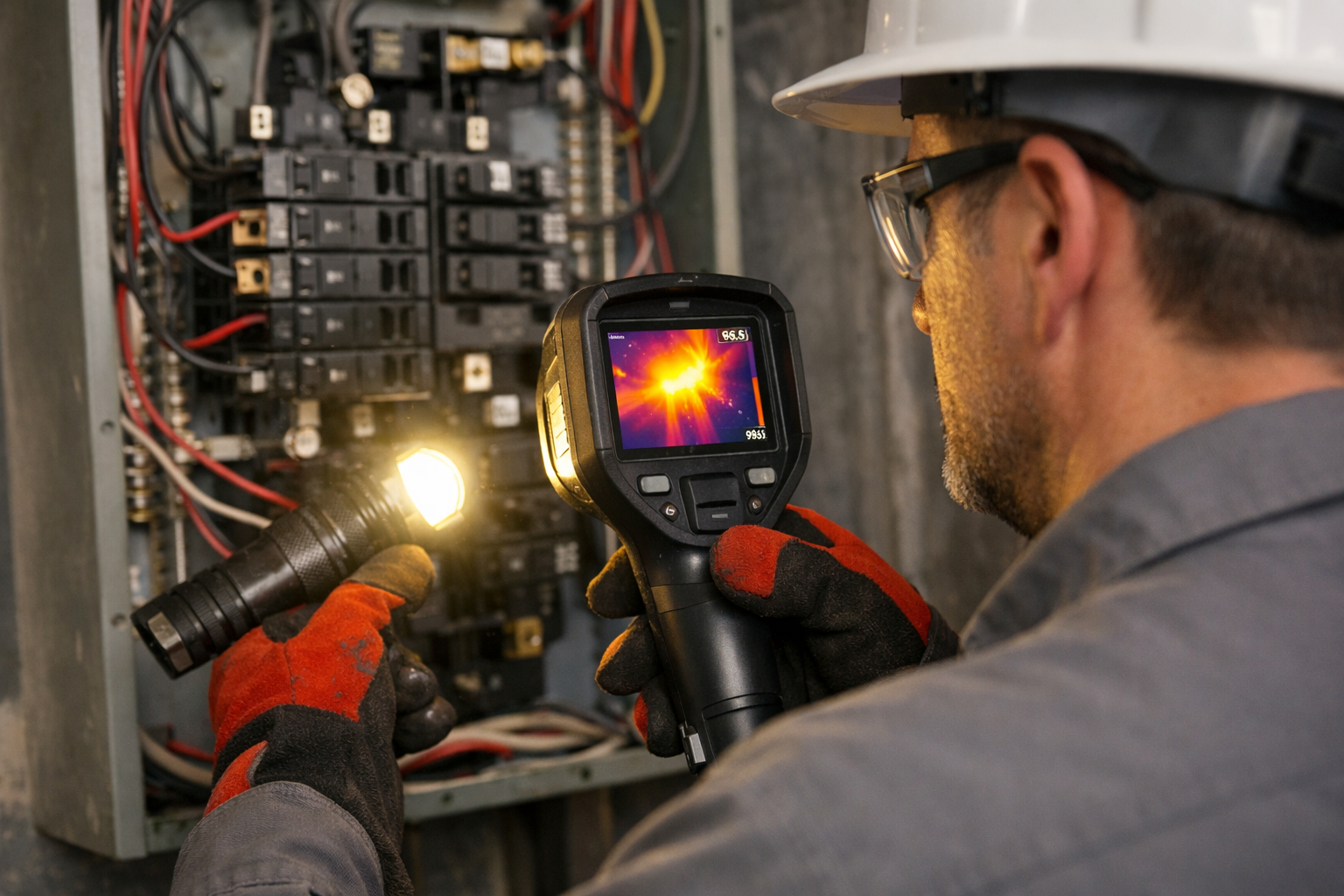
Visual inspection is essential, but electricians often support it with testing and measurement. Thermal imaging can reveal hot spots under load that are not obvious when the system is idle. Meter readings may help confirm abnormal current draw or voltage conditions. Load analysis can show whether a circuit is under unusual strain. These tools do not replace physical inspection. They strengthen it by confirming whether suspicious areas are actively running hotter than they should. For building owners, this adds confidence that the diagnosis is based on operating conditions rather than guesswork from appearance alone.
- The Surrounding System Tells More
An electrician does not inspect a damaged component in isolation. The surrounding circuit, connected devices, panel condition, and usage pattern all help explain why the heat developed. A scorched breaker may point to a downstream issue. A discolored receptacle may reflect repeated heavy appliance use. A damaged neutral connection may affect more than one circuit. The inspection becomes more valuable when the electrician traces the problem through the broader system instead of treating the visible damage as the whole story. That wider view helps determine whether the heat source was local, recurring, or part of a larger electrical weakness.
Early Detection Changes The Risk
Inspecting for heat damage inside electrical components is about finding the evidence of stress before failure becomes obvious. Electricians look for discoloration, warped materials, brittle insulation, loose terminations, overloaded circuits, worn internal contacts, and temperature irregularities that point to hidden overheating. For property managers, facility operators, and building owners, that process matters because electrical heat damage is rarely self-contained for long. The sooner it is identified, the easier it becomes to understand the cause, reduce system risk, and keep a small internal problem from becoming a much more disruptive electrical event.
